
Tree Trimming in Coeur d'Alene, Including View Pruning
Crown work that keeps a tree healthy and a lake view open, done with cuts planned for how the tree will grow next, not just how it looks today.
Tree trimming in Coeur d'Alene covers more ground than most homeowners expect: crown cleaning to remove deadwood, crown thinning to let light and air through, structural pruning on young trees to set their shape for the next twenty years, and the service homeowners ask about most, opening a lake view without wrecking the tree that's blocking it. Every one of those is a different set of cuts made for a different reason, and doing them well means understanding how the species responds, not just where the branches happen to be in the way.
Crown work, done right
Crown cleaning
Removing dead, dying, and broken limbs before they become a hazard on their own schedule instead of yours. This is usually the first pass on any tree a crew has not worked before.
Crown thinning
A crew takes out a share of the live interior growth so wind can pass through instead of pushing against a solid sail, and so the inner canopy dries out faster after rain. The tree keeps its natural outline; it just carries less load in a storm.
Structural pruning
Shaping cuts on younger trees that correct weak unions and competing leaders early, while the tree is small enough that the correction is easy and low-risk.
View pruning, the Lake City way
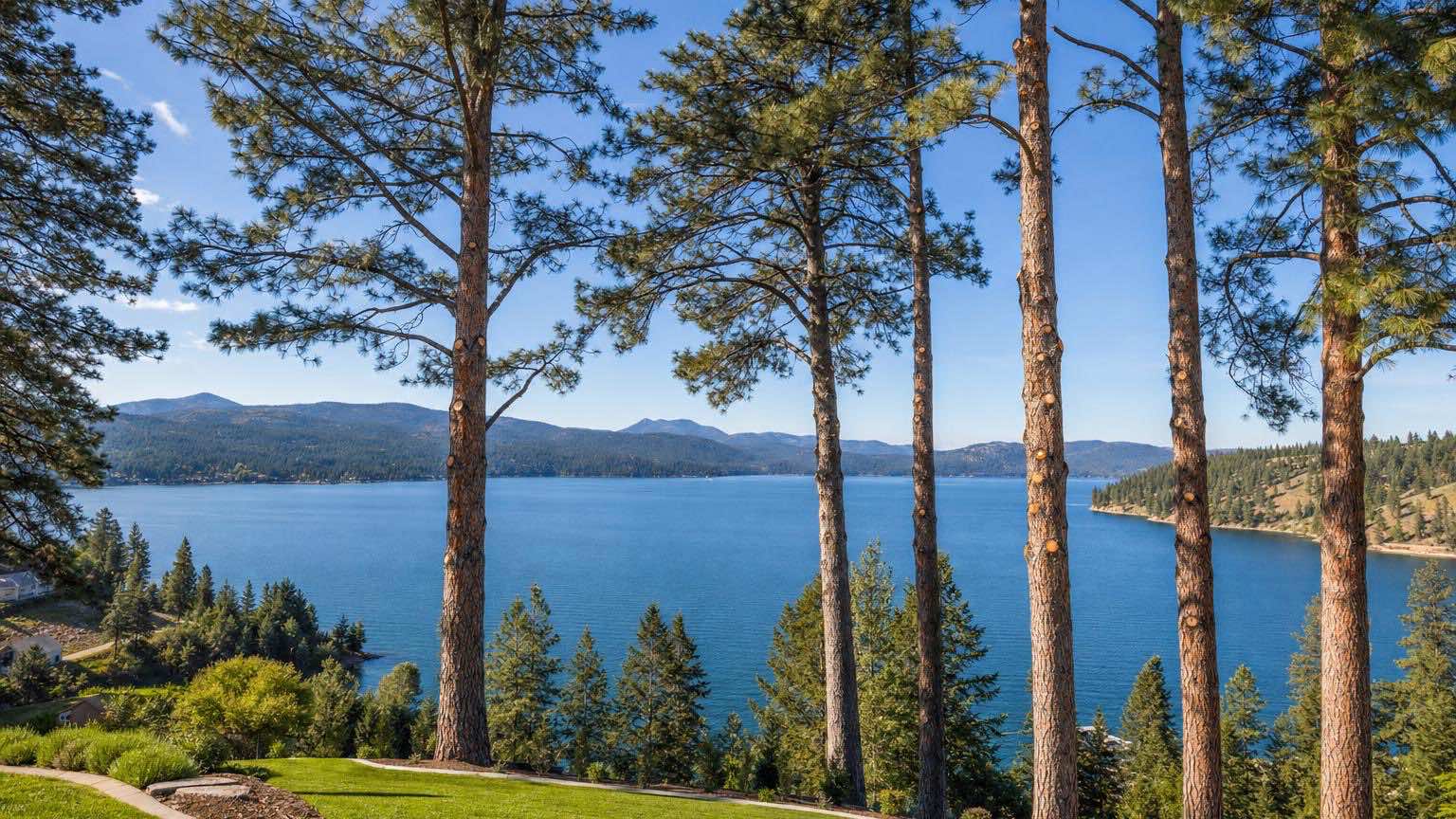
Many properties here sit somewhere between a good view and a great one, with a few trees standing in the difference. Real view pruning treats that as a design problem across a stand of trees, not a demolition job on one of them. A crew maps the sightline from the deck, the dock, or the kitchen window, then decide which trees to thin, which limbs to raise, and which to leave alone entirely to keep the windbreak and the privacy screen intact.
The result is a window, not a hole. Cuts follow each tree's natural branch structure, so the crown that's left looks like it grew that way rather than like something was hacked off it. Because it's planned around growth, not just today's view, the same corridor stays open for years with light maintenance instead of a repeat clear-cut.
Topping is not a shortcut
Topping, cutting a trunk or major limbs down to stubs at an arbitrary height, is still common advice from crews looking for a fast job. It isn't a view solution. Topping cuts remove most of a tree's food-producing foliage, trigger a rush of weakly attached regrowth, and open large wounds that decay enters through. The tree usually grows back into the view within a few seasons anyway, denser and less stable than before. It is not a sound option, even when it would be the faster sale.
Health pruning and when to do it
Most structural and health pruning in North Idaho is best done during dormant season, late fall through early spring, when the tree isn't actively pushing growth and pests and disease are less active.
Conifers vs. deciduous
Ponderosa pine, Douglas fir, and grand fir tolerate pruning across most of the year, but dormant-season work still reduces sap loss and pest attraction. Flowering and deciduous species are more sensitive to timing and heal cleaner from cuts made before spring growth starts.
Avoiding stress cuts
Heavy pruning during active summer growth or right after a drought stressor asks more of a tree than it can recover from cleanly. A contractor should flag it if a job should wait for a better window rather than push it through on your original timeline.
Storm-prep pruning
Wind off the lake and heavy wet snow are the two things that put a limb through a roof in this county. Storm-prep pruning reduces the sail a crown presents to wind, removes co-dominant unions with included bark before they split under load, and lightens end-heavy limbs that snow tends to collect on. It's cheaper and a lot less disruptive than an emergency call after the fact. If a storm does get ahead of you, the storm damage page covers what happens next.
Common questions
What's view pruning and how is it different from topping?
View pruning is selective removal and crown thinning across a stand of trees, planned around a specific sightline, that leaves each tree looking like it grew that way. Topping hacks a tree down to stubs at an arbitrary height, which weakens it, invites decay, and grows back denser than before. The first is the sound approach. The second is not.
When is the best time of year to trim trees in North Idaho?
Dormant season, roughly late fall through early spring, is best for most structural and health pruning, since the tree isn't pushing active growth and pests are less active. Deadwood removal and hazard limbs can be handled any time of year they're spotted.
How often should trees be trimmed?
Most established trees do well with a check every two to four years, less often for slow-growing conifers, more often for fast-growing species or a view corridor that keeps filling back in. Young trees benefit from lighter, more frequent structural pruning while their shape is still being set.
Will pruning limbs near my roofline damage the tree?
Not when it's done as a planned crown reduction rather than a blunt cut at the roofline. A crew removes limbs back to a healthy lateral branch or the trunk, which keeps the cut clean and lets the tree compartmentalize the wound properly instead of leaving an open stub.
Can you thin a tree without ruining its shape?
Yes, that's the point of crown thinning done well. A crew removes select branches throughout the canopy rather than stripping one side or cutting a flat line, so the tree keeps its natural silhouette while getting more light and airflow through the crown.
Ready to get your view back?
Request a quote for trimming or view pruning. A contractor walks the lot before anything is cut.