
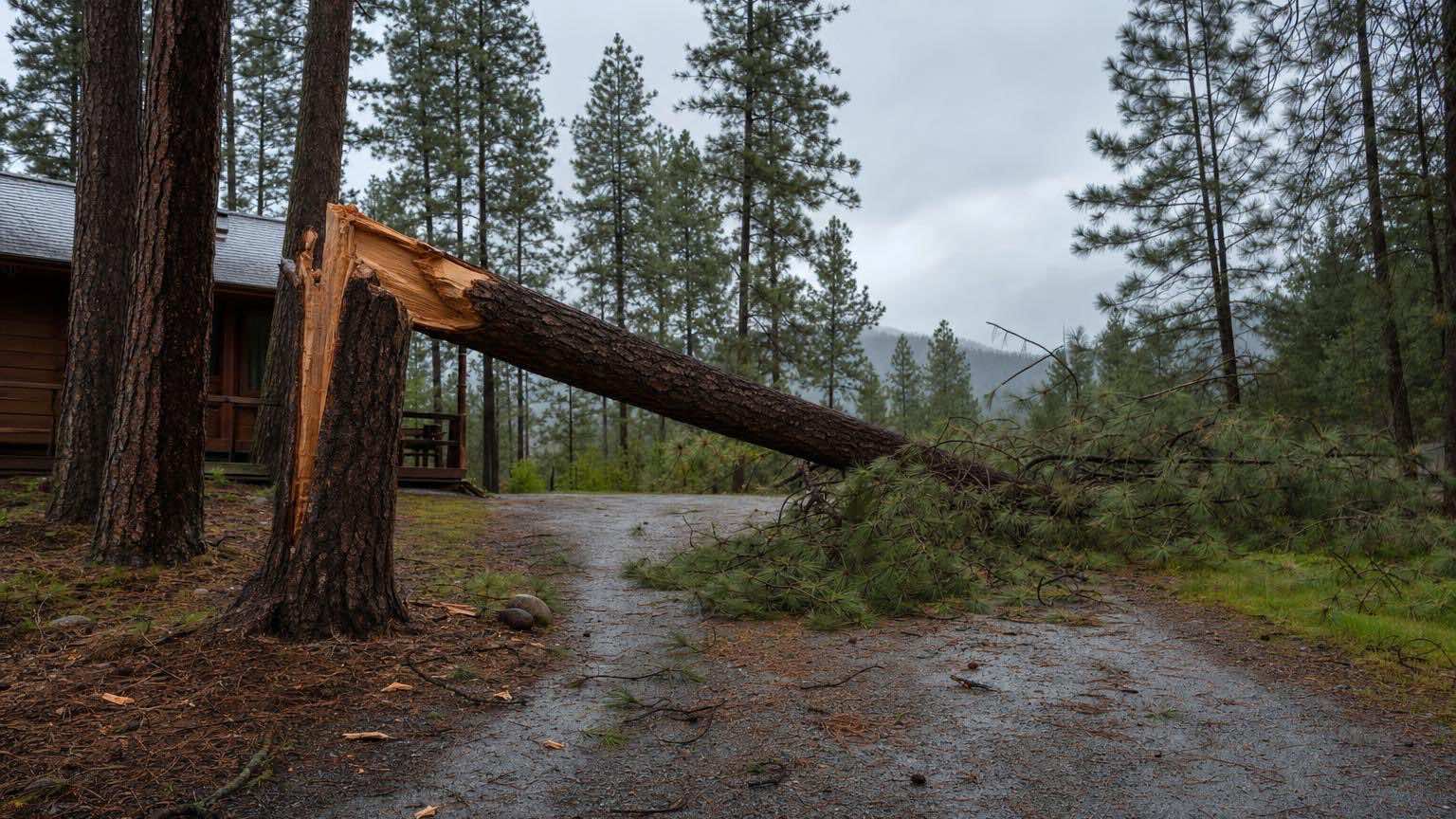
Emergency Tree Removal & Storm Damage in Coeur d'Alene
Snapped limbs, leaning trunks, and snow-loaded crowns after a hard blow off the lake. This site does not dispatch a crew and does not promise a response time.
Emergency tree removal in Coeur d'Alene tends to come in waves tied to two things: a hard wind event pushing across the open water of the lake, or a heavy wet snowfall loading down crowns that held up fine all summer. Either way, the jobs that come up are the same: a limb through a fence, a trunk leaning further than it was yesterday, a tree hung up in the branches of another tree, or a driveway blocked by debris. Careful crews work those jobs by hazard level, not by who asked first. This site does not take the calls and does not promise an arrival time.
Storm jobs are worked in order of hazard
After a significant wind or snow event, nobody should promise an arrival window measured in minutes, and you should be skeptical of anyone who does during an active storm. A careful crew triages this way: a tree on a structure, blocking an only exit, or resting on a power line moves first. A leaning tree with time left before it fails, or debris clear of anything it could hurt, gets scheduled once the urgent jobs are handled. Sending a request puts it in front of independent local contractors. They decide whether they can take it and when.
What to do while you wait
Stay clear of any tree or limb that's hung up in another tree's branches; it can shift and fall without warning. Treat any downed line as live and stay well back, and call the utility directly if a line is involved. Don't cut a leaning trunk or a limb under tension yourself; storm-stressed wood releases energy unpredictably even for an experienced hand. Keep people and vehicles out from under anything visibly cracked or partially attached until it's been assessed.
Snow-load failures
A wet, heavy snowfall off the lake can pack hundreds of extra pounds onto a limb that carried a normal load all summer without issue. Failures tend to concentrate in a few predictable spots: co-dominant unions with included bark, over-extended horizontal limbs, and any branch already weakened by prior damage or decay. Trees that held snow fine for years can still fail in an unusually wet, heavy storm, since the physics of the load matters as much as the tree's general health. A request after that kind of storm can be shared with independent local contractors. They decide whether the limb can wait or needs to come apart in sections, and they set the price.
Wind events off the lake
Open water funnels wind in a way forested inland lots don't experience, which is part of why lakefront and ridge-top properties see more storm damage than sheltered ones. A tree that's stood for decades in a stand can suddenly be the exposed one after neighboring trees come down or get thinned, changing how wind loads it. This is one of the reasons storm-prep pruning, covered on the tree trimming page, is worth doing ahead of the season rather than only reacting after.
Root failure and trunk failure look similar from the yard but call for different handling. A tree that's gone over at the roots, pulling up a plate of soil with it, is often still attached and under tension in a way that makes it dangerous to approach casually. A trunk that's snapped cleanly is a more straightforward removal. A crew assesses which one it is dealing with before deciding how to safely take it apart.
Insurance documentation
Storm damage often means an insurance claim, and a little documentation before cleanup starts makes that process easier.
Photograph first
If it's safe to do so, photograph the damage from multiple angles before anything is moved or cut, including the tree, what it hit, and the surrounding area. This is the documentation most adjusters ask for first.
Keep the scope
A contractor can provide a written scope of the hazard and the work performed, which you can pass along to your insurer. That contractor is not a party to your policy.
Common questions
Does this site promise round-the-clock storm response?
No. Lake City Tree Works does not dispatch a crew and does not promise an arrival time. Independent local contractors set their own schedules and, when they take a storm job, usually work the most hazardous situations first.
What should I do before a crew arrives?
Stay clear of any hung-up limb or leaning trunk, treat downed lines as live and stay well back, and don't attempt to cut storm-stressed wood yourself. If it's safe, photograph the damage for your insurance records before anything is moved.
Will a contractor document the damage for an insurance claim?
A contractor may provide a written scope describing the hazard and the work performed, which you can submit along with your own photos. The contractor is not a party to your policy.
My tree is leaning on power lines. What do I do?
Stay well back, keep others away, and call the utility company directly first, since a tree on a line is an electrical hazard before it's a tree removal job. Once the utility has addressed the line safely, a tree crew can handle the tree.
How are storm calls usually prioritized?
By hazard, not by call order. A tree on a structure, blocking an only exit, or involving a power line moves to the front. A leaning tree with time before it fails, or debris clear of anything it could damage, gets scheduled once the most urgent calls are handled.
Dealing with storm damage right now?
Send a request. A local contractor may contact you. This site does not promise an arrival time.