
Stump Grinding in Coeur d'Alene
A ground stump instead of a standing one: no shoots coming back, and the ground ready for what's next.
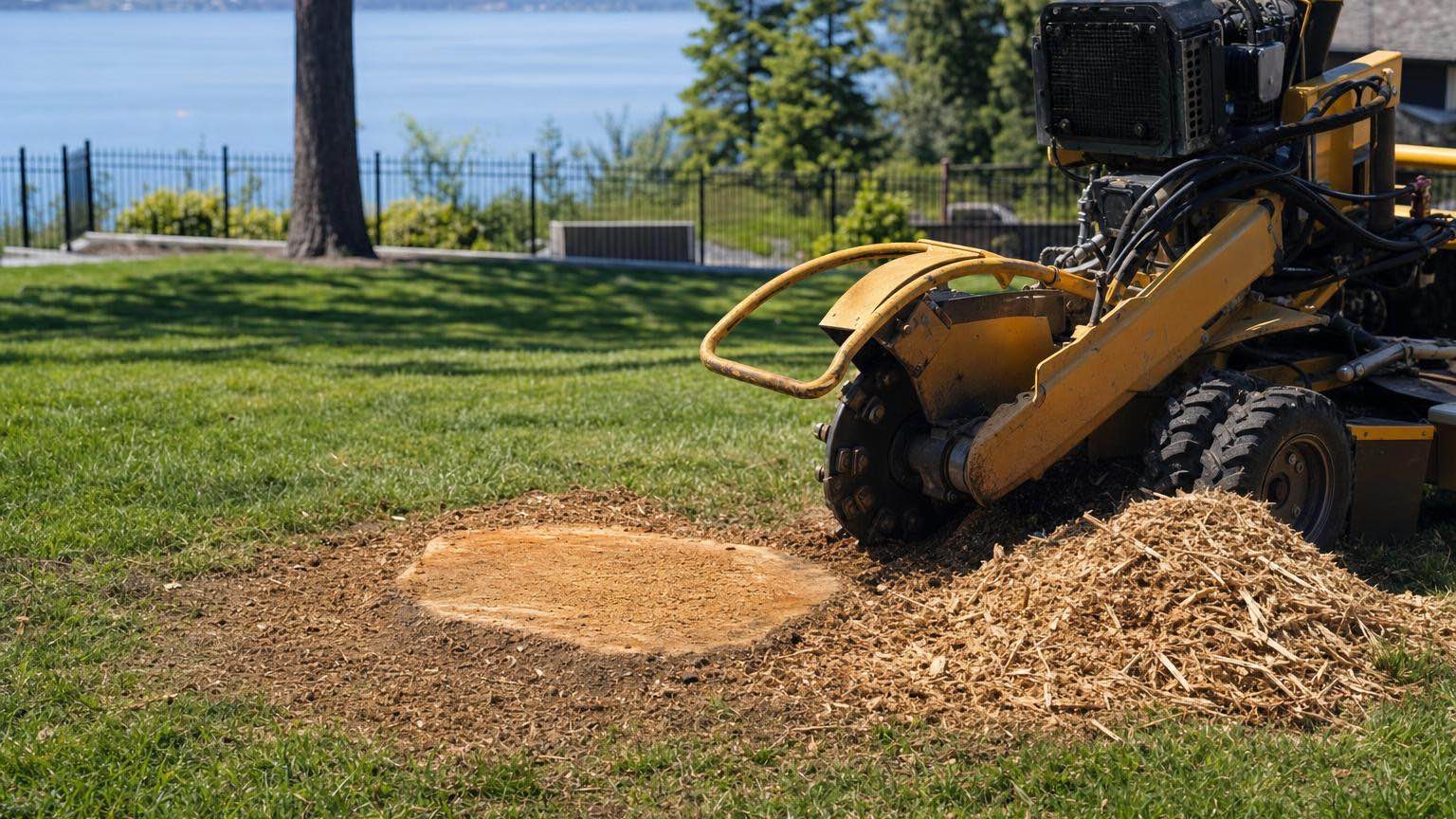
Stump grinding in Coeur d'Alene finishes a job that removal starts. A cut trunk left at grade keeps sending up shoots for years, holds moisture against the yard, and sits right where you probably want a lawn, a garden bed, or a new tree instead. Grinding chews the stump down below the surface with a rotating cutting wheel, leaves a bed of chips where the trunk used to be, and lets you plant or grade over the spot without excavating half the yard to do it.
Why grind instead of pull
Pulling or excavating a stump means digging out a much wider area than the stump itself, which risks nearby roots, buried utility lines, irrigation, and any hardscape close by. A stump grinder works in place, chewing the wood down to a set depth without disturbing the surrounding soil structure. It's faster, leaves a smaller footprint, and costs less than excavation for the vast majority of residential stumps.
The machine itself is a wheel of carbide teeth that works side to side and top to bottom until the wood is reduced to chips. Larger machines handle wide ponderosa or fir stumps in open yards; smaller, more maneuverable units get through gates and tight side yards where a full-size grinder won't fit. A crew matches the machine to the access, not the other way around.
How deep a grind goes
Standard depth is well below grade, past the root flare, which is deep enough for sod or a new planting bed without hitting solid wood later. If you're planning to plant a new tree close to the same spot, a crew can grind deeper and wider to clear more of the root mass first. Tell the contractor what is going in the ground next and they can grind to match it.
Surface roots radiating out from the stump are a separate question from depth. On a lawn, a crew can grind visible surface roots down a few feet out so a mower doesn't catch them. Near a garden bed or a walkway, the crew talks through how far out to take it before starting, since every extra foot of root is more grinding time.
What's left behind
Wood chips
Grinding produces a pile of chips and shredded wood roughly where the stump stood. Some homeowners want them hauled off; others want them left as mulch or backfill. A crew asks before work starts.
Backfill
Once chips are cleared or worked in, the resulting depression can be backfilled with soil to bring the area level with the surrounding lawn or bed, ready for sod or seed.
Regrowth
Grinding well below the root flare removes the growth points most likely to send up new shoots, which is the main reason it outperforms just cutting a stump flush at ground level.
Stumps near structures, septic, and utilities
A lot of Kootenai County properties outside city sewer service run on a septic system, and stumps close to a drain field need extra care so the grinder doesn't damage the lines underneath. The same goes for stumps near a foundation, a dock, a retaining wall, or buried power and irrigation lines. A crew asks about known utility locations before grinding and adjust depth and approach near anything sensitive, rather than treating every stump the same.
If you're not sure where a line runs, that's worth confirming before a crew schedules the grind, not after the machine is already on site. A stump sitting a few feet from a septic tank lid or a shallow water line usually still comes out fine; it just changes how carefully the crew approaches it and sometimes how deep they are willing to go without hand-digging to confirm what's underneath first.
Clearing several stumps or a full lot
If you're dealing with more than one or two stumps, especially as part of opening up acreage or clearing space after a thinning project, grinding several in one visit is more efficient than scheduling them separately. It's a natural pairing with lot thinning and defensible space work, where a stand thinning project often leaves several stumps behind that need grinding to finish the job.
Common questions
How deep do you grind a stump?
Standard depth goes well below grade and past the root flare, deep enough for sod, seed, or a garden bed without hitting solid wood later. If you're planting a new tree close to the same spot, a crew can grind deeper and wider to clear more of the root mass first.
Will grinding damage my lawn or septic system?
Grinding disturbs far less ground than excavating or pulling a stump, since the grinder works in place rather than digging a wide pit. Near a septic drain field, foundation, or buried utility line, a crew adjusts depth and approach based on where those lines actually run rather than grinding blind.
Can a ground stump grow back?
Grinding well below the root flare removes most of the growth points that send up new shoots, so regrowth is uncommon after a proper grind. A stump just cut flush at ground level, without grinding, is far more likely to keep sprouting.
What do you do with the wood chips?
Whatever works for you. A crew can haul the chips off site, leave them piled for you to use as mulch elsewhere on the property, or use them to backfill the ground where the stump stood. A crew asks your preference before work starts.
Can you grind multiple stumps at once for a lower rate?
Yes, grinding several stumps in one visit is more efficient than separate trips, and contractors price multi-stump jobs accordingly. This comes up often after a lot thinning project, where several stumps are left behind and need clearing to finish the site.
Got a stump in the way?
Request a quote, including multi-stump pricing if you have more than one.