Tree Removal in Coeur d'Alene, Idaho
When a tree has to come down on a tight lot, a steep bank, or right over the roofline, the plan matters as much as the saw. Here is how an independent local crew typically approaches it. This site does not perform the work.
Tree removal in Coeur d'Alene rarely means walking up to a tree in an open field and dropping it straight down. Most removal jobs involve a lean toward a roofline, a trunk growing out of a slope above the lake, or a snag standing over a driveway with no clear drop zone. Before anyone starts a saw, a crew looks at the lean, the root condition, what's around it, and how much of the job has to come down in pieces rather than as a single fell. That assessment is what separates a clean removal from a cracked retaining wall or a dented roof.
Deciding a tree actually needs to come down
A crew looks for the signs that separate a tree worth saving from one that's become a liability: dieback concentrated in the upper crown, root heave or soil cracking on the uphill or downhill side, included bark at a major limb union, a hollow or heavily decayed trunk, and roots girdling the base instead of spreading out from it. In North Idaho, a few things show up often: western white pine in decline from blister rust, and ponderosa or fir weakened by a previous storm and never fully recovered.
Not every declining tree needs to come out. Sometimes cabling a weak union, reducing a heavy limb, or simply monitoring the tree for a season is the better call, and a contractor should say so even when a removal would be the easier sale. If you want a second opinion on a tree that worries you before committing to removal, that's exactly what a hazard assessment is for.
When it's urgent, and when it can wait
A tree leaning further after every windstorm, one with a fresh crack at the base, or a trunk hanging over a structure after storm damage moves to the front of the queue. A tree with some crown dieback but a sound trunk and no lean toward anything it could hit usually has more time. A contractor should say honestly which category it falls into rather than push urgency that is not there.
If the concern is a view, not a hazard, that's a different conversation entirely, and often the better answer is selective view pruning rather than removing the tree outright.
Rigging on steep and lakefront lots
Working the grade
A lot with a steep drop to the water changes everything about how a tree comes down. Crews rig for a controlled lower rather than a free-fall drop, using rope systems and lowering devices to bring sections down in a chosen line instead of letting gravity and the slope decide. Footing, anchor points, and the crew's own access up and down the bank get planned before the first cut.
Protecting what's below
Retaining walls, docks, boathouses, irrigation lines, and a neighbor's fence line all factor into the rigging plan. On tight lakefront parcels a crew is often threading a trunk section between a deck and a septic line with no room for error, which is why the plan gets set before the saw starts, not improvised halfway through the job.
Crane vs. climb
Most removals in Coeur d'Alene are handled by a climbing crew with rigging. A crane makes sense in a smaller set of situations.
When climbing is the better call
Tight lake lots, limited road access, overhead power lines, or a steep bank with no clear staging area for heavy equipment all favor a climbing crew. Climbers can reach spots a crane truck simply can't get to, and rigging systems let a crew lower sections precisely without needing a large machine footprint on the property.
When a crane earns its keep
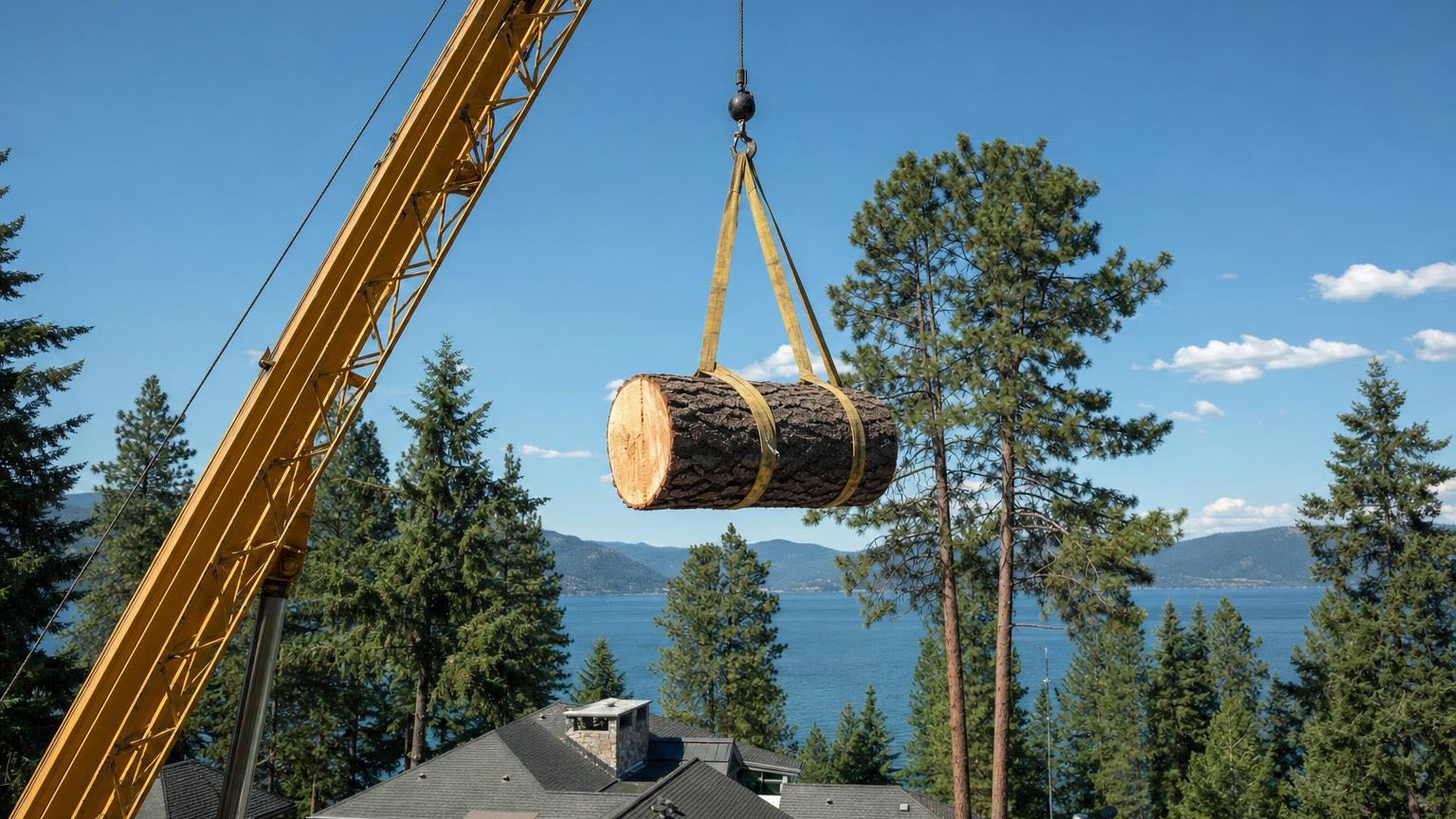
A crane can be the safer, faster option for an especially large-diameter trunk, a tree too structurally compromised to climb safely, or a removal where lifting whole sections clear of a structure or dock beats lowering them piece by piece. It requires enough yard and road access to set up, which not every lakefront lot has.
What drives the cost
A contractor should not quote a number without seeing the tree, but the factors that move a removal from inexpensive to involved are consistent: the tree's size and species, how accessible it is for equipment, how much of the job has to be rigged and lowered instead of dropped, whether a crane is needed, and how the debris gets handled. A straightforward backyard removal on open, flat ground typically costs a fraction of a technical lakefront removal that needs full rigging and careful cleanup near a dock or retaining wall.
Ask the contractor for a written estimate that breaks out what is driving the price before work starts. If a quote can't explain its own number, that's worth a second opinion.
Cleanup and the wood
Once a tree is down, you generally have options: haul everything off site, leave rounds for firewood, or chip the brush and smaller material for use as mulch on the property. A crew asks which you prefer before work starts rather than assume. Most removals leave a stump behind, and grinding it below grade is a separate step is available through the stump grinding service whenever you're ready for it.
Common questions
How do I know if a tree needs to come down or can be saved?
Look for dieback concentrated in the upper crown, a hollow or decayed trunk, root heave in the soil, or a lean that's worsened after recent storms. Not every declining tree is a lost cause; sometimes cabling, crown reduction, or monitoring for a season is the better call. A hazard assessment gives you a straight answer either way.
How much does tree removal cost?
It depends on the tree's size, species, accessibility, and how much rigging the job needs. A simple removal on open ground costs far less than a technical lakefront removal requiring full rigging and careful cleanup near a dock or wall. Ask the contractor for a written estimate that explains what is driving the number before any work starts.
Do you remove trees near docks and boathouses without damaging them?
Yes. Crews rig for a controlled lower rather than a free-fall drop, planning anchor points and section sizes specifically to keep material clear of docks, boathouses, and retaining walls below the tree. On tight lakefront lots this planning happens before the first cut, not partway through the job.
What happens to the wood and debris after removal?
You choose. A crew can haul everything off site, leave rounds behind for firewood, or chip the smaller material into mulch you can use on the property. They confirm the preference before work begins so there's no surprise pile left behind.
Do I need a permit for tree removal in Coeur d'Alene?
Sometimes. Requirements differ depending on whether the property is inside city limits, out in the county, or near the shoreline. Check with the City of Coeur d'Alene or Kootenai County before removing a tree you're unsure about, A contractor can help figure out which rules apply to the property.
How do you remove a tree that's too close to the house to drop normally?
A crew rigs it and takes it down in sections rather than felling it whole. A climber ascends, removes limbs and trunk pieces in a planned sequence, and lowers each section on rope so nothing swings toward the structure. It takes longer than a straight drop, and that's the point.
Have a tree you need looked at?
Send the details and a photo through the contact form.