Forest Thinning & Defensible Space in Coeur d'Alene
Wildfire-wise thinning for wooded acreage across Kootenai County's wildland-urban interface: spacing crowns, clearing ladder fuels, and handling the slash it leaves behind.
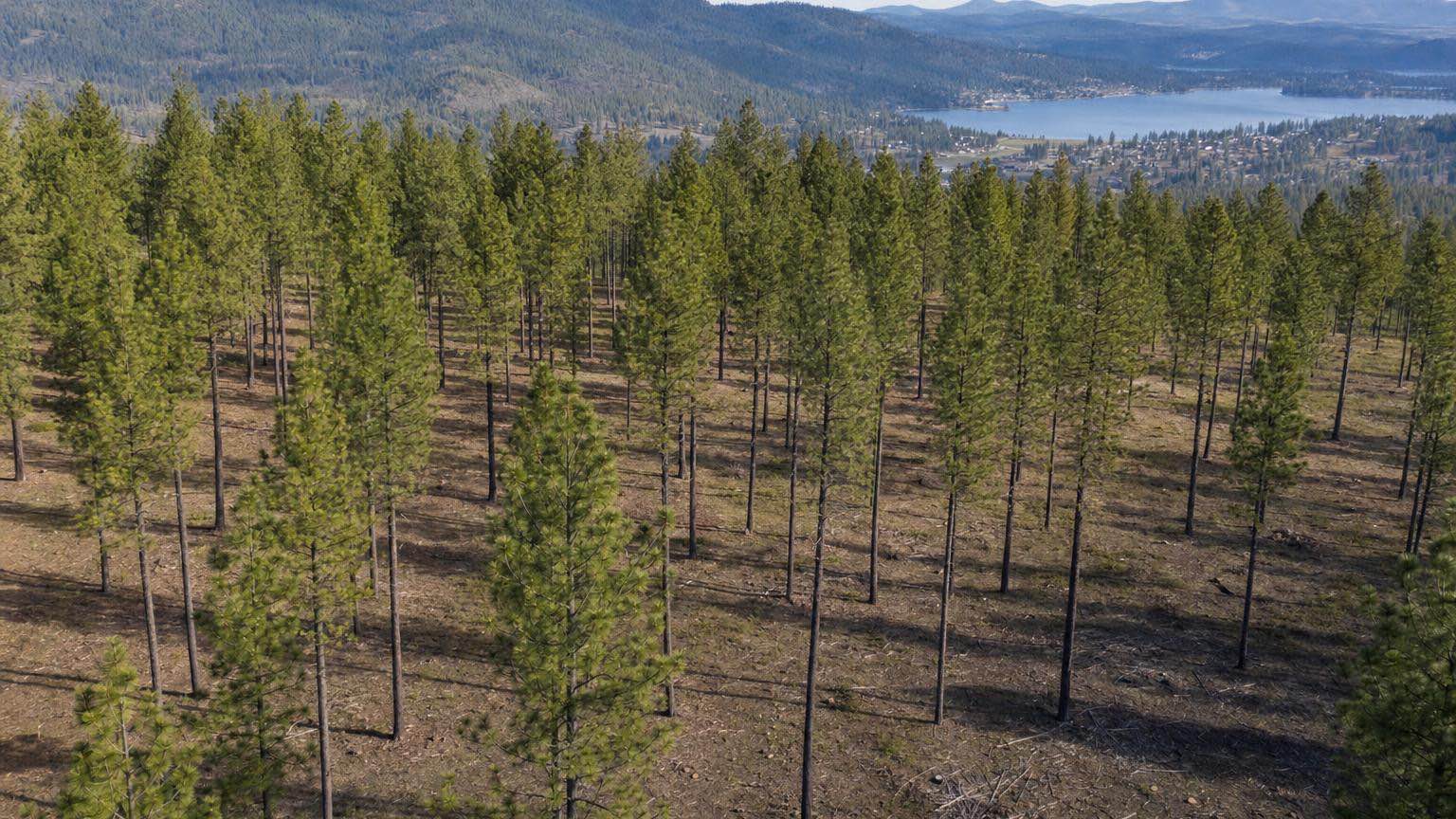
Forest thinning in Coeur d'Alene is mostly a wildland-urban interface problem. A lot of Kootenai County acreage, especially out toward Rathdrum and the timbered edges around Hayden and Dalton Gardens, sits where a dense stand of pine and fir runs right up to a house, a shop, or a fence line. Thinning that ground for defensible space means changing how a wildfire would move through it: opening spacing between crowns, clearing what lets a ground fire climb into the canopy, and dealing responsibly with everything that gets cut instead of leaving it stacked as the next fuel load.
What wildfire-wise thinning actually changes
Untouched, an overcrowded stand carries fire two ways: along the ground through brush and duff, and up into the canopy through anything connecting the ground fire to the treetops. Thinning breaks both paths. Crews open gaps between crowns so fire can't leap tree to tree as easily, remove the smaller and weaker trees competing for the same light and water, and clear the brush and low limbs that act as a ladder. None of this makes a property fireproof. It changes the odds and gives a fire crew something defensible to work with.
Idaho Department of Lands and local fire districts publish Firewise-style guidance on the zones closest to a structure versus the outer edge of a property, and the standards differ by distance. Crews work within that general framework rather than a one-size approach, since a zone right against the house needs a different level of clearing than timber two hundred feet out.
Ladder fuels
Ladder fuels are the low branches, small trees, and brush that connect the ground to the canopy. On their own, a grass fire or a smoldering ground fire usually stays low and is easier to fight. Add a ladder of low limbs and understory brush, and that same fire can climb straight into the crowns, where it spreads faster and throws embers much further. Limbing up mature trees and clearing dense understory growth removes that ladder without requiring wholesale removal of the stand.
On a lot that hasn't been managed in years, ladder fuels are usually the biggest single finding when a crew walks it: young fir regenerating thick under a mature ponderosa canopy, brush filling in gaps where sunlight reaches the ground, and dead lower limbs still attached and dry. Clearing that layer often does more for defensible space than removing any of the larger trees.
Spacing for a healthy stand, not just a safer one
Thinning an overcrowded stand isn't only a fire-safety move. It's good silviculture.
Less competition
Trees packed too closely together compete for the same water, nutrients, and light, which stresses all of them and tends to favor the weakest getting weaker. Removing some of that competition lets the remaining trees put on stronger growth and develop deeper, more wind-firm root systems.
Fewer beetle and disease problems
Dense, stressed stands are more vulnerable to bark beetle activity and disease spread, since a struggling tree has less capacity to fight off either. A properly spaced stand tends to hold up better against both, which matters as much for the trees you're keeping as for the ones you're removing.
Slash handling
Thinning a stand produces a lot of material: limbs, small-diameter trees, and brush, often called slash. Left piled on the ground, it becomes the next fuel load, which defeats the purpose of thinning in the first place. Depending on the site and your preference, crews chip slash on location for use as mulch, haul it off entirely, or stack it for pile burning where that's permitted. Open burning rules change with the season and the fire district; check with Kootenai County or your local fire district on current burn permit requirements before planning to burn anything yourself.
Acreage and multi-day projects
Defensible space work scales from a quarter-acre lot to open acreage that takes several days to thin properly. A crew walks the property first, marks what is coming out and what is staying, and gives a scope before equipment shows up. Larger projects often pair naturally with stump grinding once the thinning cuts are done, since a thinned stand usually leaves a number of stumps behind.
Common questions
What is defensible space and how much do I need?
Defensible space is the buffer around a structure where vegetation has been thinned or cleared to slow an approaching wildfire and give firefighters room to work safely. How much you need depends on slope, vegetation density, and how the property sits relative to surrounding forest. A crew assesses the specific lot rather than applying a blanket rule.
What are ladder fuels?
Ladder fuels are the low branches, small trees, and brush that connect a ground fire to the tree canopy above it. Without that connection, fire tends to stay low and is easier to fight. Removing ladder fuels, mainly by limbing up mature trees and clearing dense understory, breaks that path.
Will thinning make my property look bare?
Done well, no. Crews thin to open spacing and remove competing, weaker growth, not to strip a lot down to open ground. The goal is a healthier, more defensible stand that still reads as forested, not a cleared lot.
Do you handle slash and debris removal?
Yes. Depending on the site, crews chip slash for on-site mulch, haul it off, or stack it for pile burning where local rules allow. A contractor walks through the options and current burn permit requirements with Kootenai County or your fire district before deciding.
How much acreage can you thin in one project?
It depends on stand density and access, but contractors regularly handle projects from a quarter acre up to several acres of continuous forest. Larger jobs get scoped as multi-day projects with a clear plan for what's coming out before work starts.
Ready to thin your acreage before fire season?
Request a walk-through quote for defensible space work.